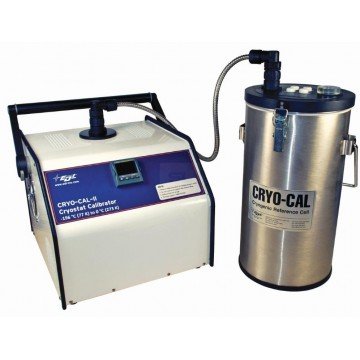
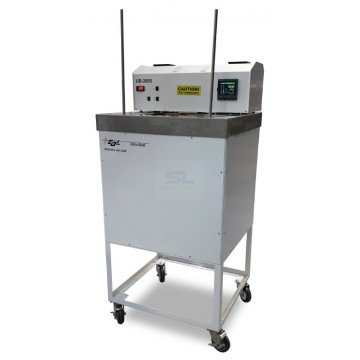
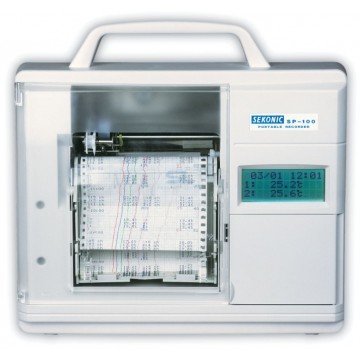
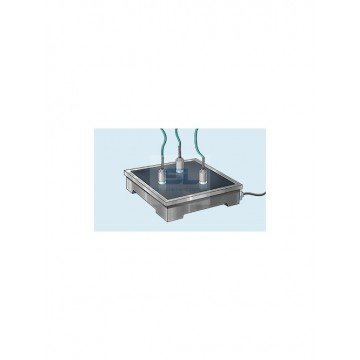
The EDL CRYO-CAL-2 cryostat provides a low-temperature environment for comparison calibration of temperature sensors. Liquid nitrogen supplies the cooling, with a standard block accommodating up to four sensors.
Temperature range: -196 to 0°C.
Cooling: Liquid nitrogen, without a compressor refrigeration system.
Sensor arrangement: Four wells with tubes and spacer options.
Current manufacturer designation: CRYO-CAL-2-LI; confirm configuration when ordering.
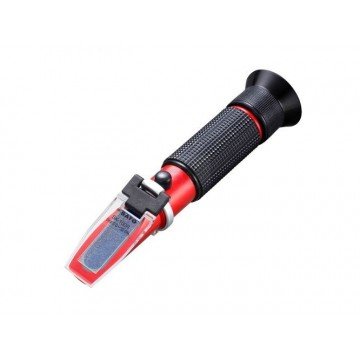
Sato handheld refractometers provide portable optical measurement of liquid samples. Choose an SK-100R series model for the required Brix range or the SK-200R for salt concentration.
Model selection: Different measuring ranges and scale divisions.
Temperature compensation: Automatic correction from 10 to 30°C.
Sample suitability: For compatible translucent liquids; unsuitable for opaque samples such as milk.
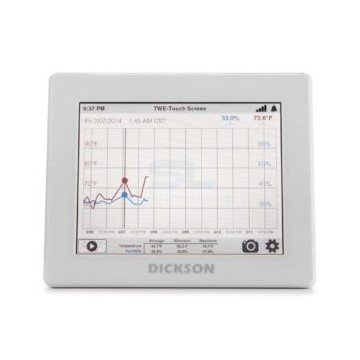
The Dickson TWP touchscreen data logger displays readings and measurement history on an 8-inch colour screen. Configure it for temperature, humidity or differential pressure monitoring using compatible replaceable sensors.
Local monitoring: Touchscreen display with audible and visual alarms.
Data access: USB download and Wi-Fi/Ethernet connectivity.
Remote monitoring: DicksonOne cloud access and notification features require the appropriate subscription.
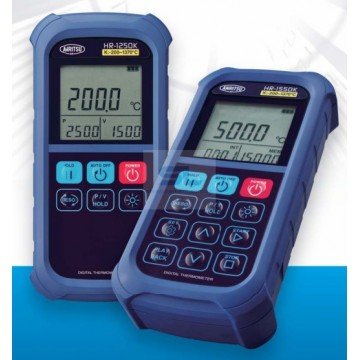
The Anritsu HR series handheld digital thermometer offers Type K or Type E thermocouple models for contact temperature measurement. Choose from basic, standard, LED-display and memory versions, then match the instrument with a probe suited to your application.
Model choices: HR-1100/1150 through HR-1750.
Probe connections: ASP or ANP, depending on model.
Application options: Selected models offer IPX5-equivalent water resistance; HR-1500/1550 models provide memory recording.
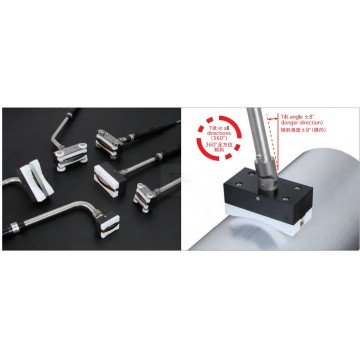
The Anritsu WE Series measures stationary surface temperatures using a self-supporting probe placed on the measurement target. Select the probe configuration to suit the surface, temperature and connected thermometer.
Contact measurement: Sensing element rests against the target surface.
Self-supporting design: For suitable surfaces where the probe can remain stable during measurement.
Configuration: Confirm the complete model code, thermocouple type, cable and connector.
This website uses cookies to ensure you get the best experience on our website