- Out-of-Stock
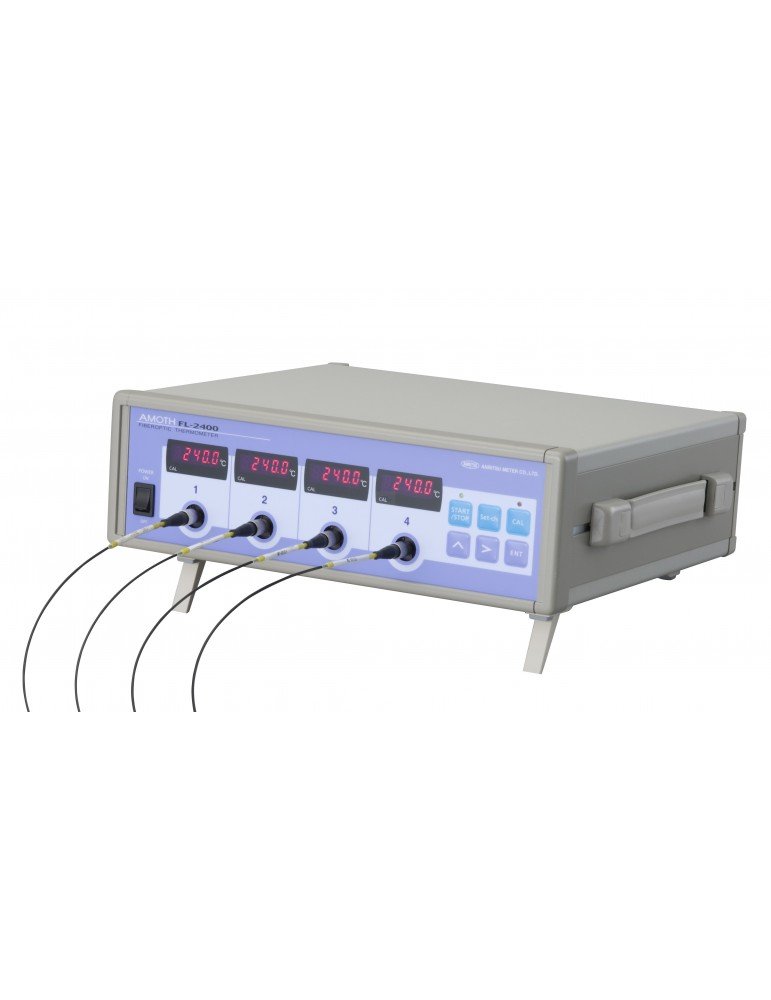



The Anritsu FL Series fiber optic thermometers measure temperature in microwave, high-frequency and high-voltage environments where conventional electrical sensors can be difficult to use.
Electrical interference can make temperature measurement difficult around microwave equipment, high-frequency processes and high-voltage components. The Anritsu FL Series provides a fiber optic sensing option for these environments, with dedicated probes selected to suit the measurement point.
Start with the number of channels required, then match the probe to the temperature range, material and installation conditions. The instrument's measurement range and the probe's operating range are different: the selected probe determines the usable range of the complete measurement system.
| Feature | FL-2000 | FL-2400 |
|---|---|---|
| Instrument | 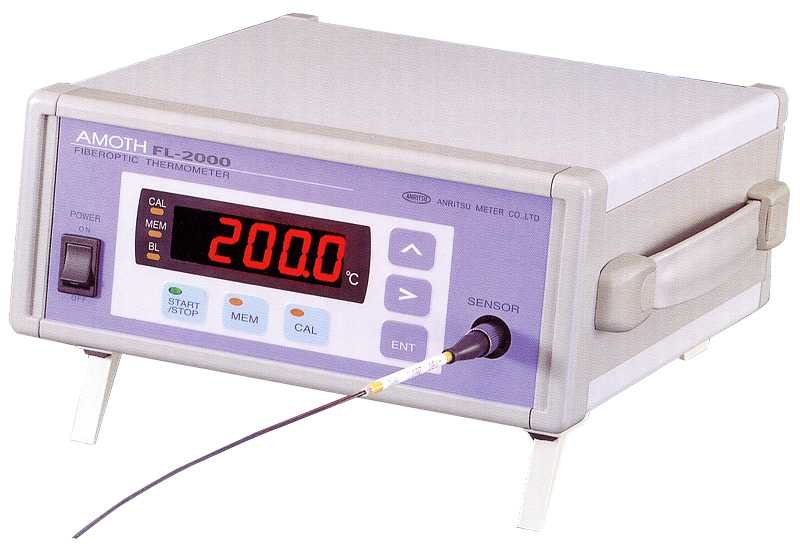 |
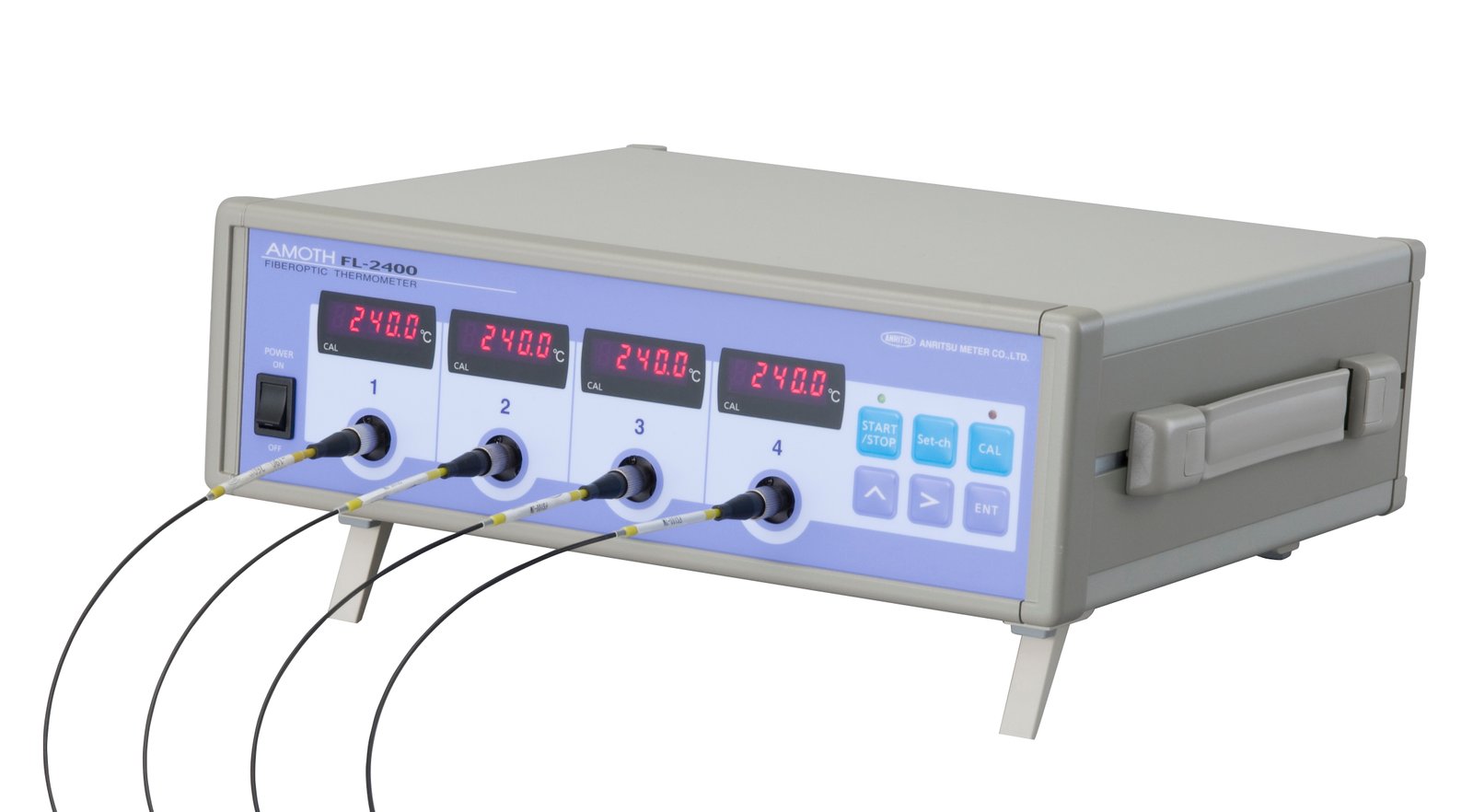 |
| Measurement channels | 1 | 4 |
| Internal memory | Up to 15,000 readings at one-second intervals | No internal memory |
| Dimensions, excluding protrusions | 210 × 88 × 230 mm (W × H × D) | 320 × 99 × 280 mm (W × H × D) |
| Approximate weight | 3 kg | 5 kg |
Temperature probes are not included. Specify the required probes and supply-voltage version when ordering.
| Instrument measurement range | -195.0 to 450.0°C; actual usable range depends on the probe |
|---|---|
| Resolution | 0.1°C |
| Accuracy before calibration | ±2°C from -195.0 to 399.9°C; ±5°C from 400.0 to 450.0°C |
| Accuracy after calibration | ±0.5°C within ±50°C of the calibration point |
| Calibration method | One-point calibration using a known temperature within the measurement area |
| Display update | Every second |
| Analog output | 10 mV/°C |
| Communication | RS-232C |
| Operating conditions | 0 to 40°C; 15 to 80% RH, non-condensing |
Consider chemical exposure, light intensity and mechanical handling as well as temperature. Confirm suitability for the actual material and operating conditions before choosing a probe.
| Probe | Temperature range | Selection guide |
|---|---|---|
| FS100 | -190 to 260°C | General-purpose measurements |
| FS150 | -190 to 260°C | More durable general-purpose construction |
| FS100H | -190 to 260°C | Liquid and chemical-resistant construction |
| FS150H | -190 to 260°C | More durable liquid and chemical-resistant construction |
| FS200 | -30 to 200°C | Chemical-resistant type |
| FS300 | -190 to 260°C | Light-resistant type for intense-light environments |
| FS400 | -20 to 400°C | High-temperature type; excludes liquid measurements |
| FS500 | -60 to 260°C | Needle type for semisolid materials |
| FS600 | 0 to 80°C | Plastic probe type |
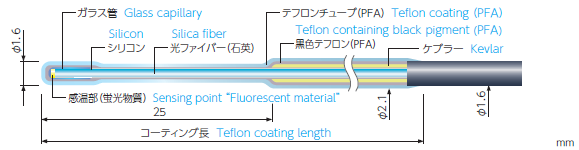
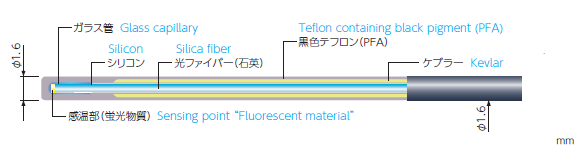
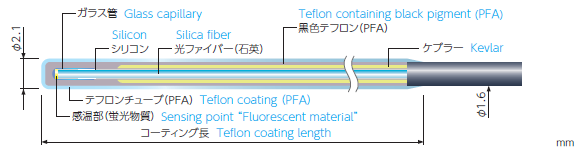
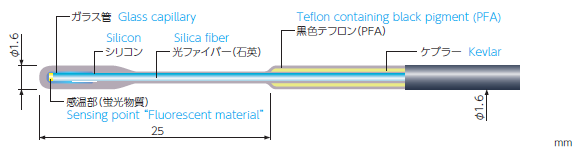
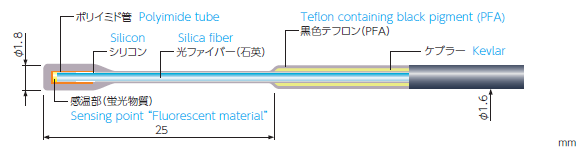
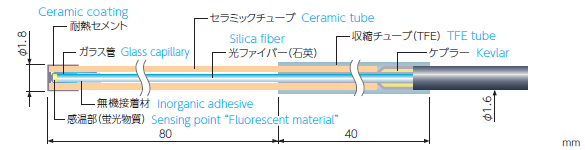

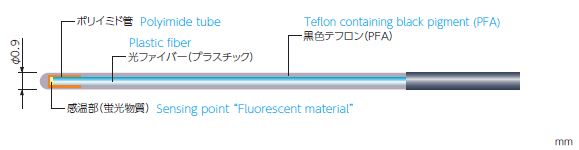
Specify the cable route and required installation length alongside the probe. Confirm fitting and seal compatibility where the probe enters a vessel or enclosed process.
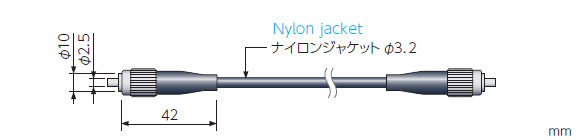
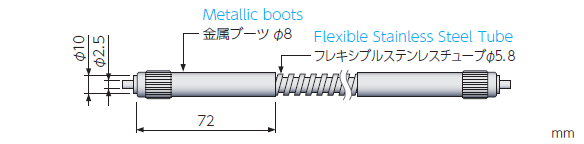
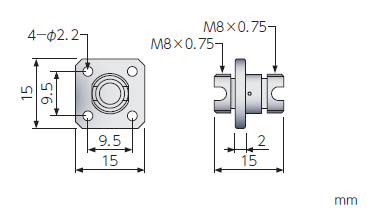
Fitting options include TFE and Viton seal materials. Select the version to suit the installation and process conditions.
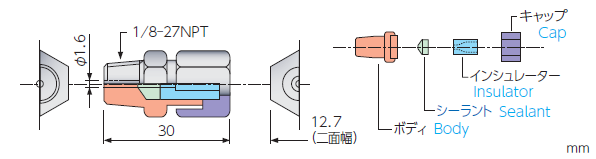
For a suitable configuration, provide the number of measurement points, expected temperature range, measured material, cable length and any exposure to chemicals or intense light. Include your required analog output or PC connection, supply voltage and quantity.
Contact us for pricing and availability. Include an existing instrument or probe model number if you need a replacement or an additional measurement channel.