- Out-of-Stock
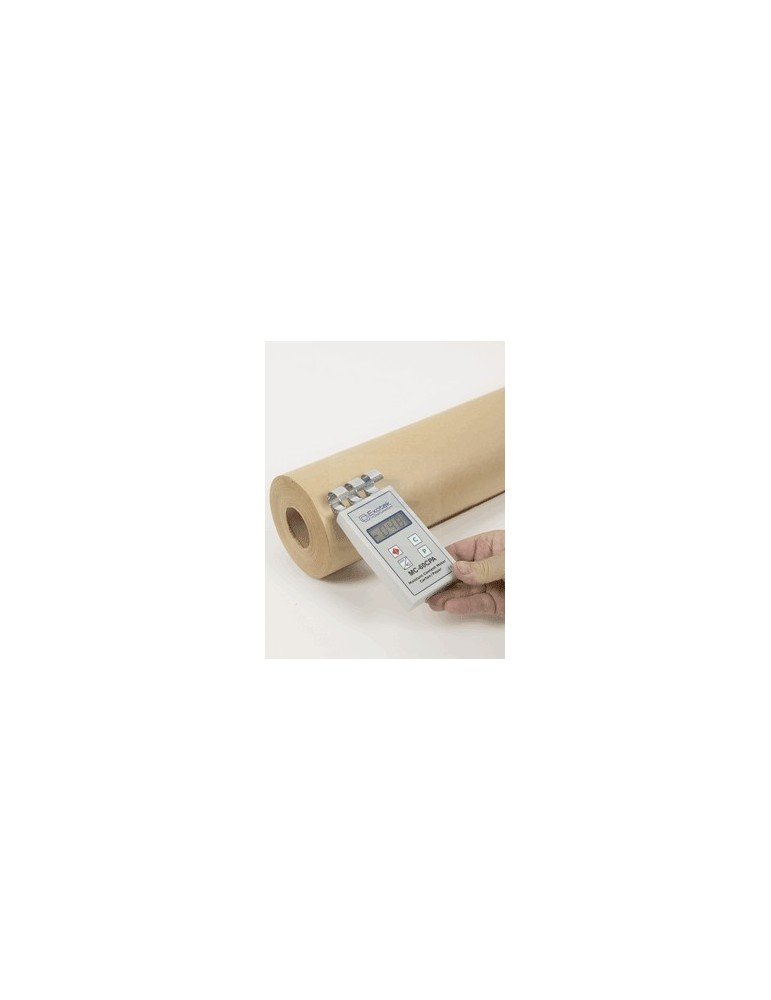
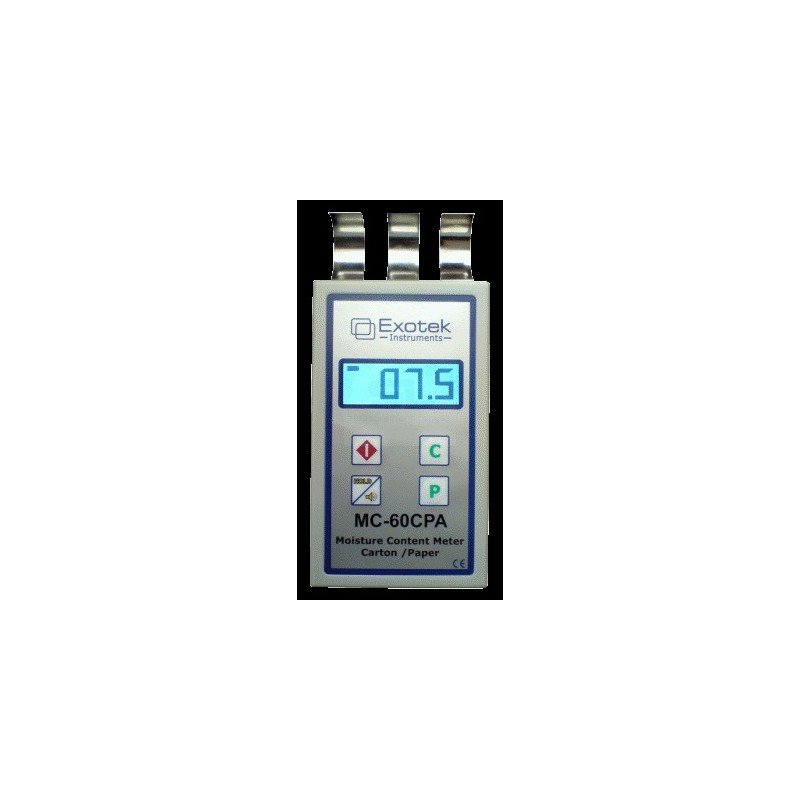
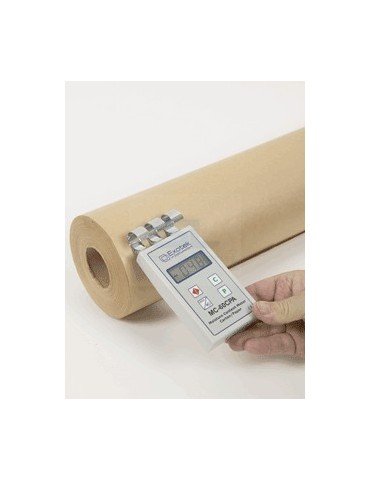



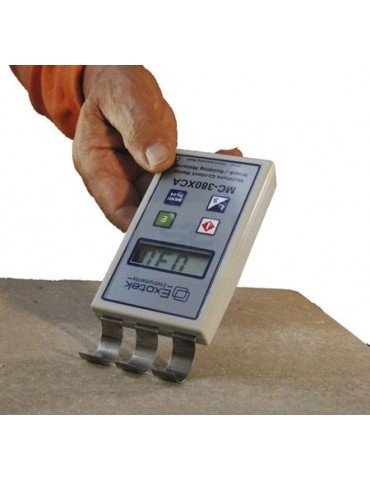
Check moisture in paper and cardboard without puncturing the material using the Exotek MC-60CPA pinless moisture meter. Place the sensor against the surface for quick checks on suitable paper rolls, stacks and reams.
Inspect paper stock and packaging materials with the Exotek MC-60CPA paper and cardboard moisture meter. Its pinless sensor allows repeated checks without leaving probe holes, helping operators compare moisture conditions across suitable rolls, stacks and reams.
Use it during incoming inspection, before printing or converting, and when investigating differences between stored batches. Taking readings at several positions can help identify areas that need closer examination.
The MC-60CPA uses capacitance measurement to detect changes in the material’s dielectric properties. Press the sensor against the paper or board and select the appropriate material setting before comparing readings.
Keep the material type, sample arrangement and measurement technique consistent. A reading from one paper grade should not automatically be compared with another grade using the same setting.
| Material or application | Inspection purpose |
|---|---|
| Paper rolls, stacks and reams | Compare readings at accessible positions and identify variation within a batch. |
| Offset and printing paper | Check incoming stock and investigate differences before printing or finishing. |
| Kraft and packaging paper | Compare material condition during receiving, storage and preparation for converting. |
| Carton, cardboard and corrugated fibreboard | Screen packaging materials using the appropriate material group and sample arrangement. |
| Tissue, filter and crepe paper | Assess suitability for the specific grade, thickness and stacking method before routine use. |
The following specifications refer to the manufacturer’s MC-60CPA V202 datasheet. Confirm the instrument version and applicable material calibration when ordering or replacing an existing meter.
| Item | V202 specification |
|---|---|
| Model | Exotek MC-60CPA |
| Measurement principle | Capacitance / dielectric measurement |
| Paper measuring range | 0–33% H2O |
| Cardboard measuring range | 0–175% H2O |
| Published accuracy | Approximately ±2%; suitability depends on material and measurement conditions |
| Material groups | 12 |
| Scanning depth | Up to approximately 50 mm |
| Display resolution | 0.1% |
| Display | Backlit graphical LCD |
| Operating temperature | -10 to +60°C |
| Functions | Hold, adjustable alarm threshold, audible alarm, automatic power-off and battery status indication |
| Housing | ABS plastic |
| Sensor material | Passivated stainless spring steel |
| Power supply | 9 V alkaline battery |
| Dimensions | 132 × 62 × 30 mm |
| Weight | Approximately 150 g including battery |
| Supplied accessories | 9 V battery, carrying bag and instruction manual |
Understanding the ranges: These are the manufacturer’s published material-dependent scales, not relative humidity ranges. Confirm the selected material group and moisture-content basis before comparing results with a laboratory report or acceptance limit.
Existing instruments: Earlier MC-60CPA information lists different measuring ranges and material-code counts. For replacement enquiries, provide the instrument label and manual version so the correct specification can be matched.
The quoted scanning depth is an approximate maximum. It does not mean the meter measures an entire roll or reports moisture separately at each depth.
Contact us for pricing and availability. Specify Exotek MC-60CPA and include: