- Out-of-Stock
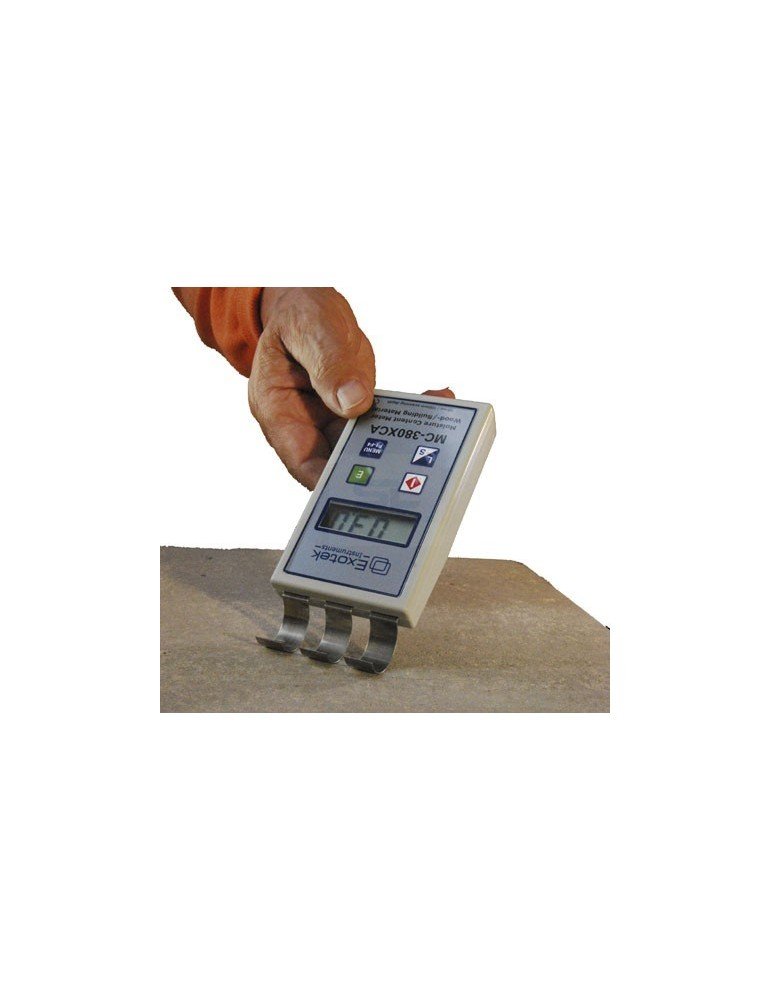
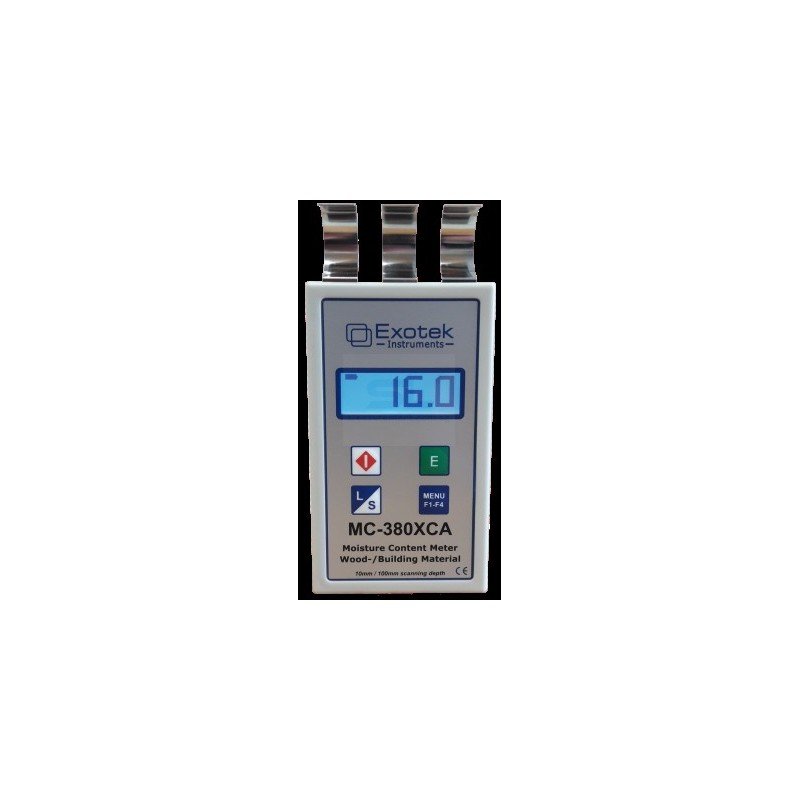



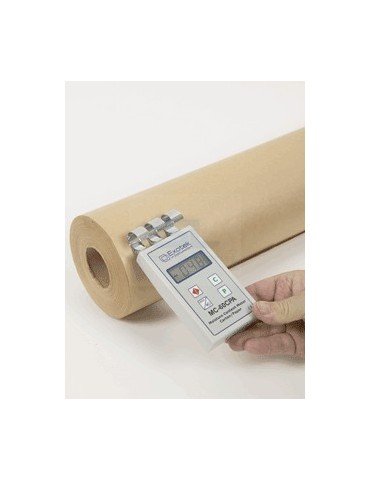
Check timber and building materials without penetrating pins using the Exotek MC-380XCA moisture meter. Two scanning modes help you compare moisture indications near the surface and through a greater material depth.
Compare moisture conditions in timber, flooring and building materials with the Exotek MC-380XCA pinless moisture meter. Its capacitance sensing method allows checks without inserting pins, making it useful when you need to inspect several positions while preserving the surface.
Use the meter to screen incoming timber, compare boards before fabrication or investigate areas of suspected dampness. Record the material setting, scanning mode and measurement position so subsequent checks can be compared consistently.
| Scanning mode | Sensor arrangement | Selection guidance |
|---|---|---|
| Nominal 10 mm | Built-in sensor | For shallower checks where the near-surface material is the main interest. |
| Up to 100 mm | Measuring springs | For screening a greater material depth where the thickness and construction are suitable. |
Scanning depth is not a depth-specific reading. The sensor responds to material within its sensing field. It does not report moisture separately at exactly 10 mm or 100 mm, and readings from layered materials require careful interpretation.
| Item | Published specification |
|---|---|
| Model | Exotek MC-380XCA |
| Measurement principle | Capacitance / high-frequency dielectric measurement |
| Wood moisture range | 0–85% H2O at a density setting of 200 kg/m³; maximum range varies with density |
| Building-material moisture range | 0–11% H2O, depending on material density |
| Calculated RH range | 0–98% RH for applicable building-material settings |
| Published accuracy | Approximately ±1% moisture content |
| Wood settings | 50 groups; density range 200–1180 kg/m³ |
| Building-material settings | 19 groups; density range 1200–3000 kg/m³ |
| Display resolution | 0.1% |
| Operating temperature | 0 to +60°C |
| Power supply | 9 V alkaline battery |
| Housing | ABS plastic |
| Dimensions | 150 × 71 × 25 mm |
| Weight | Approximately 165 g including battery |
| Supplied accessories | Battery, carrying case and instruction manual |
The usable range and interpretation depend on the selected material group, density and sample construction. The maximum wood range should not be applied to every timber species.
The MC-380XCA can calculate an RH value from moisture-content readings for